
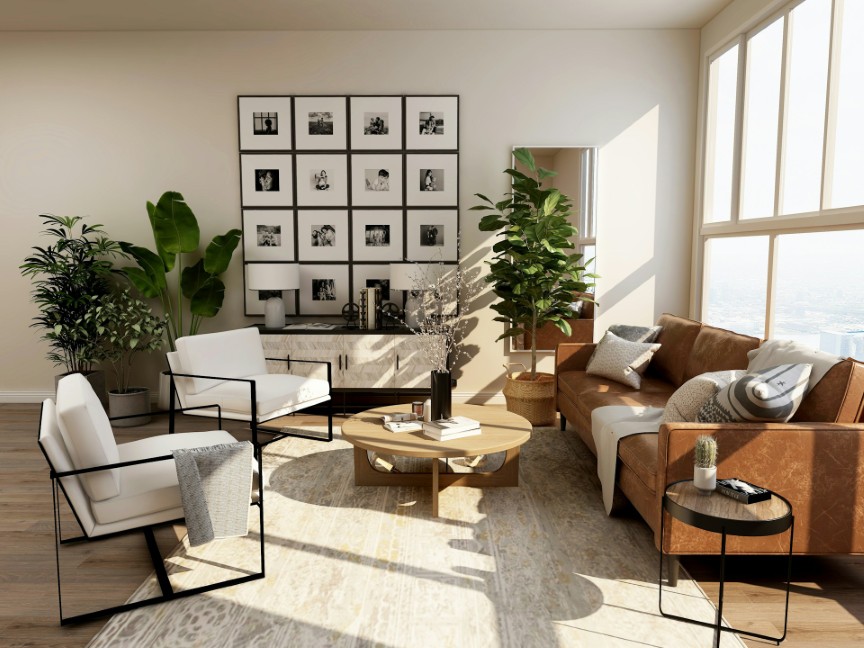
Choosing color is one of the most personal decisions in any home, but it is also one of the easiest places to make an expensive mistake. A paint swatch that feels perfect in a store can look flat in morning light, overly yellow by evening, or unexpectedly harsh beside your flooring and furniture. The strongest palettes are built the way full service interior design approaches a home: as a connected environment rather than a set of separate decorating choices. When color responds to architecture, materials, natural light, and the way you actually live, the result feels effortless, balanced, and enduring.
Start With the Architecture and Fixed Finishes
Before you think about accent walls, trending shades, or the emotional language of color, begin with what is not easily changed. Flooring, tile, countertops, fireplaces, cabinetry, trim color, and large upholstered pieces all place quiet but powerful limits on what will work. A beautiful paint color can still fail if it ignores the undertones already present in the room.
This is where many homeowners go wrong: they choose paint in isolation. In reality, paint should usually support the room’s fixed elements rather than compete with them. If your floors have a red or orange cast, a cool gray may look discordant. If your marble has blue-gray veining, a creamy beige may suddenly appear muddy. Color becomes convincing when it creates harmony among the permanent pieces that define the space.
- Wood flooring: note whether it reads golden, red, walnut, gray, or neutral.
- Stone and tile: identify both the dominant color and the undertone.
- Cabinetry and millwork: decide whether these finishes should blend or contrast.
- Large furnishings: sofas, rugs, and drapery often set the emotional temperature of a room.
If you are building a palette from scratch, choose one or two anchor materials first. Once those are established, paint becomes easier to refine. This order creates stability and prevents the common problem of selecting a paint color that later clashes with finishing choices.
Understand Light, Undertones, and Mood
Color never stands still. It shifts with time of day, weather, bulb temperature, and exposure. A north-facing room tends to cool colors down, while southern light often brings warmth and softness. East-facing rooms can feel bright and clear in the morning but flatter by afternoon, while west-facing rooms grow warmer later in the day. For that reason, a color that looks elegant in one room may feel entirely different in another just a few steps away.
Undertones matter just as much as brightness. White is rarely just white. Gray can lean blue, green, violet, or taupe. Beige can skew pink, yellow, or gray. The key is to compare options side by side and look for the hidden cast that appears when samples are placed against your actual finishes.
| Lighting Condition | Typical Effect on Color | Helpful Direction |
|---|---|---|
| North-facing light | Makes colors appear cooler and more muted | Consider warmer neutrals or softened tones |
| South-facing light | Enhances warmth and can brighten pale shades | Balanced neutrals often work well |
| East-facing light | Bright in the morning, quieter later | Test colors throughout the day before deciding |
| West-facing light | Warmer and richer in late afternoon | Avoid colors that become too golden or intense |
Mood should follow function. Bedrooms often benefit from softened, restful colors that reduce visual noise. Dining rooms can handle more depth and richness. Living spaces usually perform best with layered neutrals or nuanced mid-tones that adapt to changing light and activity. The point is not to follow rigid rules but to recognize that color should support how a room is used.
Build a Cohesive Palette Room by Room
A successful home rarely relies on a single color repeated everywhere, but it should still feel connected. The strongest palettes create movement from room to room without abrupt visual breaks. Think in terms of a family of colors rather than a lineup of unrelated favorites.
One practical way to do this is to establish three levels within your palette: a primary neutral, a secondary supporting tone, and one or two accent colors. Your primary neutral may appear on most walls or major surfaces. The supporting tone can shift depth or temperature in adjacent rooms. Accent colors can then appear in upholstery, art, case goods, pillows, or smaller painted moments.
- Choose your anchor room. Start with the room you use most or the room with the most fixed finishes.
- Select a lead neutral. This becomes the reference point for adjoining spaces.
- Create tonal variation. Move slightly darker, lighter, warmer, or cooler in nearby rooms while staying in the same family.
- Repeat key colors. Echo one or two tones in textiles, artwork, or trim so the palette feels intentional.
- Reserve bolder color for emphasis. A library, powder room, or dining room can carry more saturation without disrupting the home’s overall flow.
Transitions matter especially in open layouts, apartments with visible sightlines, and older homes with strong architectural character. You do not want every room to look identical, but you also do not want each threshold to feel like a complete stylistic reset. Cohesion is often what makes a home feel professionally considered rather than pieced together over time.
Test Before You Commit
No matter how certain a color seems on paper, test it in the actual space. Paint large samples on multiple walls or use removable sample boards that can be moved around the room. Look at them in daylight, lamplight, and evening shadows. View them beside trim, flooring, upholstery, and hardware. This simple step saves both money and frustration.
It also helps to narrow your choices with discipline. Too many options make subtle differences harder to read. Compare two or three serious contenders, not twelve. Once one color is eliminated, the remaining options become easier to judge.
- Test large samples, not tiny swatches.
- Review the color at several times of day.
- Check it against wood, stone, fabric, and metal finishes.
- Stand in adjoining rooms and look across sightlines.
- Notice whether the color still feels right after a few days.
If the process feels more complicated than expected, that is normal. Color is not only visual; it is relational. It depends on context. That is why thoughtful planning almost always outperforms fast decisions.
When Full Service Interior Design Adds Clarity
Some homes need more than a good eye and a fan deck. Renovations, historic properties, layered architectural details, and whole-home furnishing projects often require a wider view of color than paint alone. In those cases, a professional can connect walls, finishes, custom upholstery, lighting, art, and spatial flow into one coherent plan. For homeowners who want that level of oversight, Price Designs, New York Interior Designers, offers a nuanced full service interior design approach that helps palette decisions feel grounded in the home as a whole.
This matters most when every decision affects the next one. The right color palette should not simply look attractive on a mood board. It should support the architecture, flatter the materials, and still feel right six months after the room is complete. Whether you are refreshing one apartment or rethinking an entire residence, clarity comes from seeing color as part of the total experience of home.
Conclusion: Choose Color With Confidence
The perfect palette is rarely the boldest or the most fashionable. More often, it is the one that feels settled, coherent, and deeply compatible with the way you live. Begin with the room’s fixed elements, study light and undertones carefully, create flow from space to space, and test every serious option before you commit. That measured approach is at the heart of full service interior design, and it is what turns color from a decorative afterthought into one of the strongest tools for shaping atmosphere. When chosen well, your palette does more than brighten walls. It gives the entire home a sense of ease, identity, and lasting beauty.
